


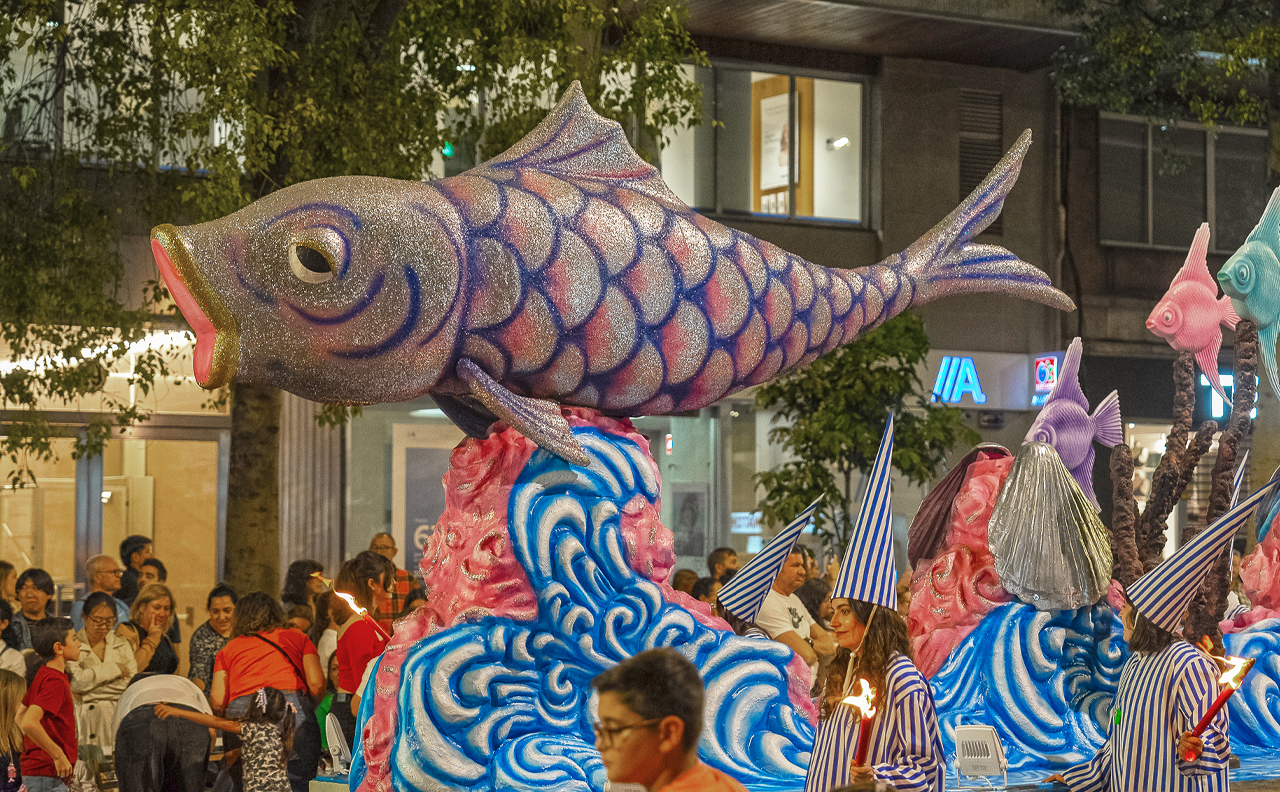
DID YOU KNOW that every year, just after easter, the Spanish city of Murcia holds a colossal funeral for a dead fish? Not just any dead fish either, but the same venerable sardine, year after year.
And “colossal” is no understatement. 1.3 million people flocked to the Murcian capital to witness the spectacular parade last year, with hotels in the city bursting at full capacity on Good Friday.
The Burial of the Sardine, or the “Entierro de la Sardina”, is a tradition that dates back to 1851, with the quirky festival celebrating its 175th iteration this year in 2026.
It's the pinnacle of Murcia's social calendar, and this extraordinary event marks the dramatic finale of the city's “Fiestas de Primavera,” earning its designation as a Fiesta of International Tourist Interest, noted for its originality and diversity.
The Burial of the Sardine, a spectacular and unusual parade
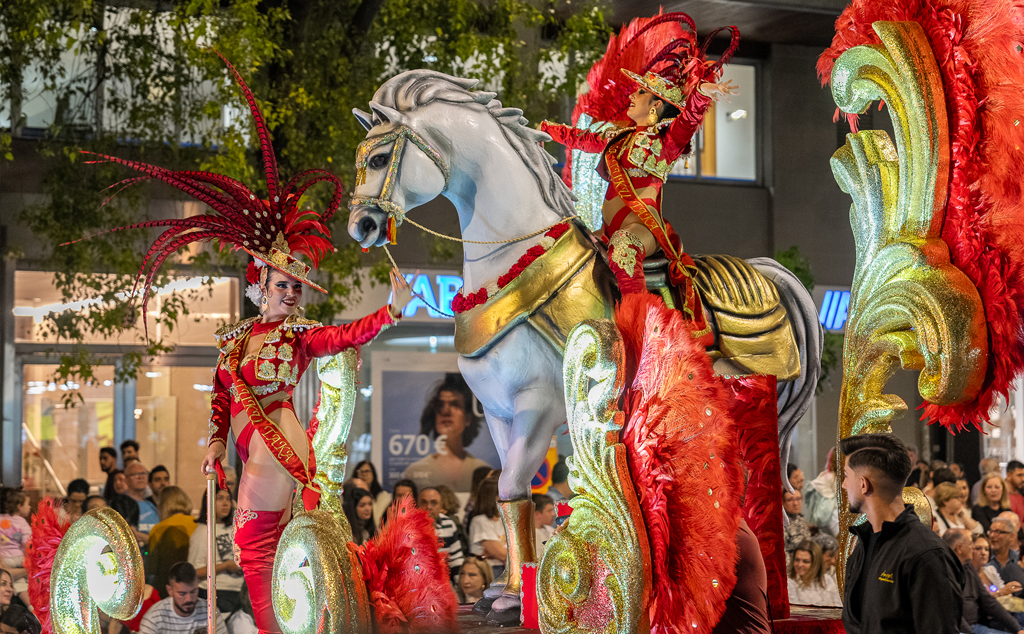
The divine and seemingly immortal slender fish at the heart of the festivities is part of an elaborate grand parade that features floats, costumed groups, music, and a famously chaotic tradition of throwing toys and gifts to the crowd in honour of the Gods of Olympus.
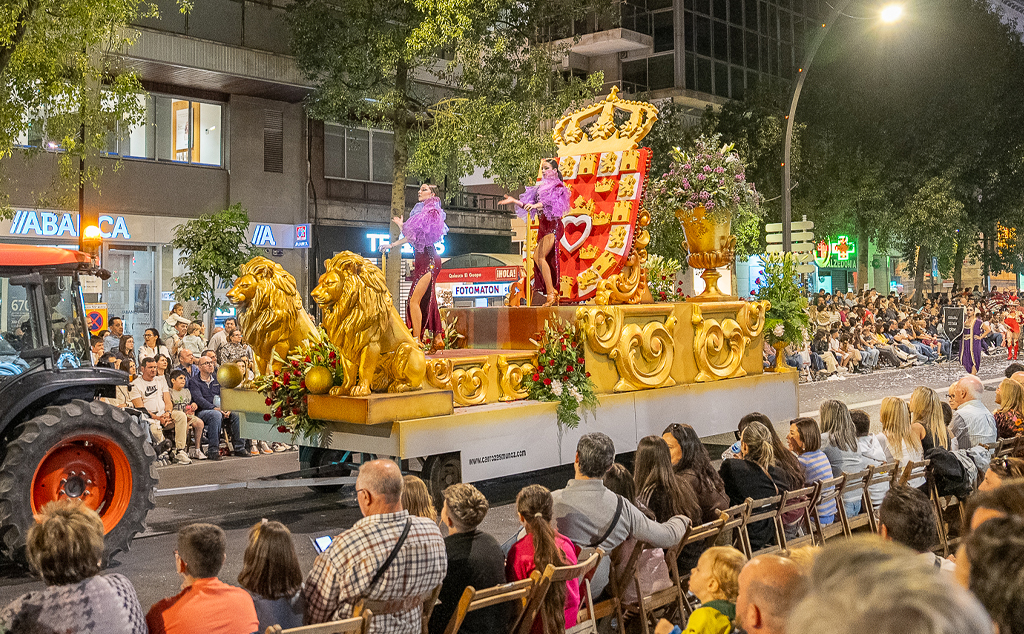
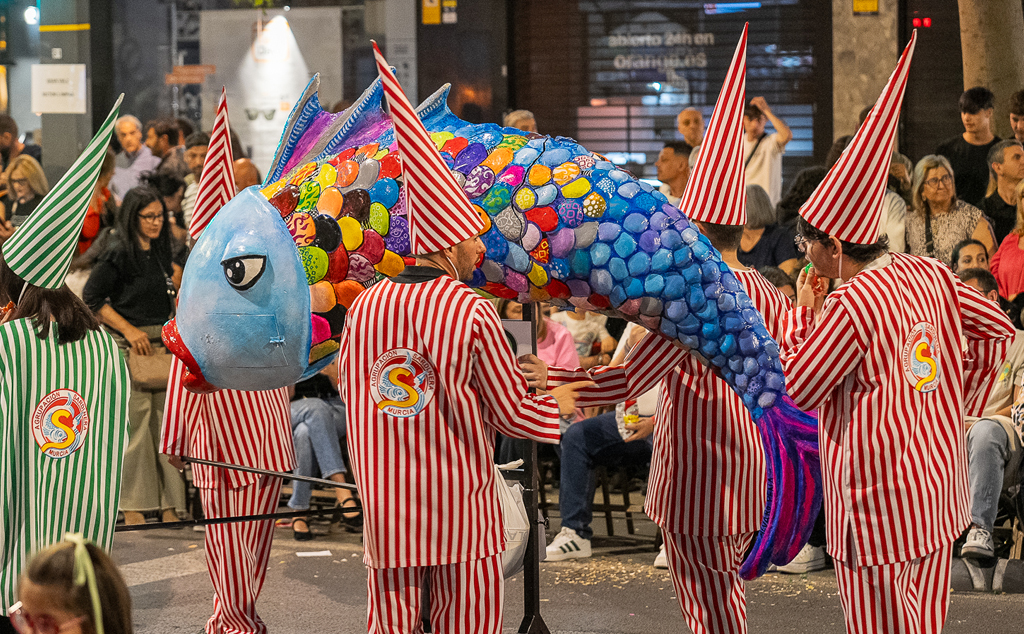
The “Gran Desfile del Entierro de la Sardina” features giants with oversized heads, firebrands, acrobats, demons, and groups of Brazilian samba guards accompanying dozens of exotically decorated floats, with each float belonging to a sardine association, or “Agrupación Sardinera”.
The parade concludes with the burning of the sardine – an oversized, brightly painted effigy of the perennial fish made of stone and cardboard, in a playful and symbolic farewell.
This act of fire, accompanied by music and fireworks, is more than mere spectacle: it is a cathartic, almost mythic ritual representing renewal and the joyous rebirth of the season.
A tradition of heritage in Murcia, the “Entierro de la Sardina”
In the days leading up to the burial, the city comes alive with a spectrum of events, including the Testamento de Doña Sardina, a deliberately humorous reading of Doña Sardina's “Last Will” punctuated with satire and social commentary.
Over the decades, the event has grown into an elaborate annual tradition with a distinctive Murcian flavour. Today, the event is a massive undertaking for the city of Murcia, requiring the deployment of 600 local police officers, 250 fire safety personnel, and nearly 700 street cleaners.
Many central streets are closed to traffic, and large parts of the route are restricted during the parade (such as Gran Vía, Plaza Circular, Avenida de la Constitución), making street parking and driving in the historic centre extremely difficult.
Free park-and-ride parking areas (Aparcamientos Disuasorios) operate on the day of the festival to keep the centre less congested. These are intended for visitors and locals alike, and visitors have the option to walk or use local transport to get to the city centre.
Visiting the parade, a festival guide for visitors
The main parade, the “Gran Desfile del Entierro de la Sardina”, starts at 20:30, but be aware that the city centre becomes very busy well before this time, with spectators arriving early to secure good viewing spots. Allow plenty of time for local travel into the city itself.
The parade proceeds along major thoroughfares, including Avenida de San Juan de la Cruz, Santa Joaquina de Vedruna, Calle Princesa, and Alameda de Colón. From here it continues through historic parts of the city, passing landmarks like Plaza de Camachos and Puente Viejo.
The Burial of the Sardine takes place in the centre of Murcia from 20:30 on Saturday 11th April 2026. Find more information on the official website.
Looking for holiday ideas and travel inspiration? Find out more about our favourite recommended things to do on the Orihuela Costa or join the La Zenia community Facebook group and find out what's going on in the local area.
Photo credit: Alexander Pichlmayr